Showing posts with label Informational Articles. Show all posts

Friday, July 9, 2010

Acting White

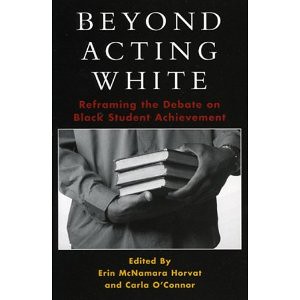
Image from racialicious.com

So I was reading this article about the phenomenon of acting white on Racialicious.com and it brought me right back to middle school! I remember growing up as a kid, all throughout elementary school, most of the people around me didn't look like me. That is to say, I went to a majority white, middle class school where there were only a handful of black kids. I never really gave it much thought in elementary school and we were all friends.

Then, I moved on to middle school and boy was I in for a surprise! Not only was the school bigger and more diverse, it was significantly populated with black students. It also had students from diverse socio-economic backgrounds. I remember the shock to my system as slowly but surely I was singled out by my new black peers. I was one of only two kids in the advanced classes and I can just remember all the white kids trying to set us up together. It seemed so obvious to me that the only reason they thought we should be together was because of our similar hues.

But it wasn't until I moved to my second middle school that I can remember being accused of "acting white". I never really felt this coming from black guys, it was usually the girls that wanted to point out how I talked or dressed or who I hung out with. I became so self-conscious that I changed how I dressed and was very aware of how I talked. It was torture!

So, now that I am an adult and I work in the public schools, it is sad to see that this trend continues. It is disheartening to see black children feeling the need to prove their "blackness", however you are supposed to do that. It is even sadder what some kids think being black means.

Take a moment and check out the article then come back to share. What were your experiences growing up? Were you ever teased for "acting white"? Or, were you part of the crowd doing the teasing?! No worries, we won't judge here. I am just interested to hear about your experiences and how you dealt with them. Hit me back!

Wednesday, June 17, 2009

This is for the Transitioners....


Well... not just the transitioners. But the reason I say this is because a lot of people either on the fence about transitioning or already in the process still feel very unsure about what their natural hair will be like, look like, feel like, etc. If you have spent many years of your life using chemicals to alter your hair texture, it can be very scary to go from straight to curly, kinky, coily and nappy (all wonderful textures IMO!). It is so easy to go back to a relaxer or perm if you feel unattractive, unaccepted, rejected, or unprofessional. This key is all about getting to the "root" of the issue. I think understanding the history behind WHY we grew up thinking our hair was bad or unmanageable is key to self acceptance in the natural journey forward.

For me personally, I have been natural so long that I honestly cannot remember what my permed hair felt like. I went natural right out of HS so I have always ONLY had jobs with my natural hair. Any serious boyfriend/husband (brief stint with marriage, that's another post) I have had has only known me with natural hair. Even still, there are times when I feel intimidated to be out in public with my fro all huge. It is not easy to be the only person in the room whose hair stands straight up when others' hair lays down flat. I think it takes guts to walk down the street with your halo of fuzzy froliciousness!

Natural is a journey and not a destination. There will always be new things to learn about your hair. In the process, you learn a lot about yourself. You also learn a lot about the people in your life. I guess the bottom line is you have to be prepared to be different, stand out, get looks and stares from strangers. But that's ok. It builds confidence, especially if you are a person who is shy and does not like to be the center of attention.

Ok so I had not planned to write all this, just kinda got carried away...my bad!
What I really wanted to share with you is an article I just read by Djehuty Ma'at-Ra of DHerbs.com. It's pretty cool and addresses African American history, texture, products, hair science, self esteem, consumerism and more. It's long but I thought it was interesting to read, even after 10 years of being natural. I really think it is a positive piece for those interested in reshaping their thinking and that applies to anyone, no matter how long the journey. I DON'T AGREE WITH EVERYTHING HE SAYS but overall I like the main points.
So click here to get to the article.

Here are some highlights:

"Basically, without being made conscious of the texture of their hair as being some wicked curse stemming from the fictitious Biblical Ham character, or some mark of sin placed on Africans from God Almighty, or a defect on God's part while making the African, Africans/African-Americans would not have the hang-ups on their hair (and other facial characteristics and physical anomalies, e.g. dark skin, broad nose, thick and protruding lips, large posterior or butt) that many of them have today which has led to the exploitation of such sentiment with the creation of a hair care industry that reaps hundreds of millions of dollars that don't see any of that money returning to the communities where most Black women live in the form of beauty school scholarships and inner city beauty pageants."

"African hair is manageable depending upon our diet, how we feel about ourselves (including our hair) or self-image, and our thinking or thoughts. This is something I have discovered through personal experience."

"Black people (and every other race of people, for that matter) - ACCEPT YOUR OWN and BE YOURSELF! God made you perfect just the way you are. All you have to do is just take care of (maintain) what you have."

What do you think? Would this have helped you during your transition?

Tuesday, March 31, 2009

African American Beauty: Reconstructed

I came across this research paper by a student from Georgia State University (2004) entitled Emulated through Images: The Globalization of Misconstructed African American Beauty and Hip-Hop Culture.

The abstract below gives an overview of the what the paper is all about:
From news coverage to entertainment,
the media shapes, reflects, reinforces and defines the world in which we live. In publishing, theatre, films, television and popular music--industries largely controlled by white men--Blacks continually struggle for both a voice and representation. Many scholars write about the stereotyping of Blacks in the media (Meyers, 1999; Davis, 1989). Light skinned Black women with classic European features predominate in beauty pageants, music videos, and in the world of modeling. It is with respect to the world of modeling and music that this discussion will examine the globalization and commodification of Black female beauty. I will examine the historical creation of Black beauty in the United States and Europe and how theses misconstructed images play out globally.

It's kind of long but a good read. How do we reconstruct our own beauty within the context of the greater society in which we live? How do we grow to feel comfortable in our skin and celebrate our sexuality without conforming to or perpetuating pre-existing stereotypes about the oversexed Black woman? It's complicated but an open and honest discussion is the best way to start. Check out the paper over here.

African American Beauty contestants from 1949 supported by a local pie shop

2008 Natural Beauty Contest from ymib

Sunday, March 1, 2009

Essence on Black Hair History

***UPDATE***

Hello Lovelies! I am updating this post for two reasons. First, I regrettably did not give credit for the lovely photo below which comes from http://www.madamewalker.net/ , a website dedicated to preserving the legacy of Madam CJ Walker. In addition, they sell their own line of hair care products which include oils, hair dresses, and creams. There is a ton of great info about the late Ms. Walker so head on over and check them out!
****************************************************************************


Essence.com has decided to take a walk down hair history lane by profiling some key events in Black hair history. I always love when things like this include Madame C.J. Walker because it shows the juxtaposition between her amazing success as a Black entrepreneur in those times as well as her products which urged Black women to "fix" their hair. Such complex history we carry on our heads! There are many neat pictures and informative snippets. So, click here to take a look for yourself. What do you think? Oh..and don't forget to read the comments people have left. In some ways, that is actually more interesting than the slide show itself!

Saturday, February 28, 2009

Cross-Cultural Hair Care

I found this interesting list of Historic Hair Care Remedies and thought I would share. Some sound good, some sound bad, some just sound weird. At any rate, I think it is interesting how the quest for beautiful hair is a common thread among many cultures. Does anything sound worthy of a try????

Egypt (Northern Africa)
  • Ancient Egyptians used citrus juice to clean their hair and scalps. The acid cut the oil and sealed the cuticle to leave hair shiny and smelling fresh.

  • To the Ancient Egyptians, shiny black hair was the beauty ideal. They used a formula of juniper berry juice that darkened the hair and kept it from turning gray.

  • To stimulate hair growth, the Egyptians applied chopped lettuce patches to bald spots. Lettuce was associated with Min, the Egyptian god of virility.

  • Another hair growth formula included a scalp massage preparation made from Fir Tree extracts. The Egyptians extracted the resin, or made an infusion from the needles, then massaged it into their scalps.

  • The Egyptians also used Castor Oil to encourage hair growth. They mixed it with Sweet Almond Oil to improve the aroma and make the oil smoother and easier to spread.

  • The Ancient Egyptians believed that thick hair was best and often improved on their own growth with hair extensions and wigs made from human hair or sheep's wool.

Sub-Sahara Africa

  • Ancient Africans steeped flowers in Olive Oil to make fragrant hair tonics.

  • They also steeped herbs in Avocado Oil for a rich hair conditioner. The astringent properties of Avocado leaves also made infusions that were ideal for treating scalp problems.

  • African Shea Butter, also known as Karite Butter, comes from the nuts of a tree found in Central Africa. When used to condition the hair and skin, shea butter moisturizes and protects against ultraviolet rays.

India

  • The Eastern Indian culture has used Ayurvedic medicine for 5,000 years to cure a variety of ailments, including hair and scalp problems. Ayurveda was developed by ancient Indian holy men and emphasized prevention over cure. To stimulate hair growth and natural pigmentation, followers of Ayurveda boiled sage leaves in coconut oil and applied the blackened residue to the hair and scalps.

  • To treat head lice, Indians mixed Neem Oil (oil extracted from seeds of Margosa or Neem Tree) to the hair and scalp at night and rinsed with an infusion of Neem leaves in the morning. Neem Oil was also used to treat scalp fungi and to promote hair growth.

  • For an excellent hair conditioner, a centuries old tradition was to soak Fenugreek seeds in water overnight, then apply the paste to the hair. The mixture was left on, then thoroughly shampooed out.

  • Fenugreek was also used to combat hair loss. Indians mixed coconut milk with a pinch of black pepper and Fenugreek powder.

  • Amla Oil (made from Indian Gooseberries) boiled in coconut oil was used as a hair tonic to stimulate growth.

The Americas

  • Native Americans in the Southwest used jojoba oil for centuries to moisturize their skin and hair.

  • The Chickasaw Indians made a solution of wood and twigs from willow trees to prevent dandruff and other scalp conditions.

  • The Hopi Indians washed their hair in an infusion made from leaves of Rocky Mountain Juniper to keep it shiny and to prevent gray.

  • Mexicans applied aloe vera to add luster and manageability to their hair. The natural gel also protected their hair and scalp from the sun's rays.

The Amazon

  • In the rainforests of South America, the Taiwano Indians treated scalp problems with heated extract of banana.

Tahiti

  • For more than 2,000 years, Polynesian women have treated their hair with Monoi Oil, a blend of highly refined Nucifera Coconut Oil and Tiare flower. The Tiare is macerated, or left to soak in the oil, for weeks before it's ready to be used. This maceration gave the oil extra moisturizing properties.

Europe

  • "Shampoo" comes from the Hindu term Champo which means "to knead." By the 1870s, English hairdressers refined the term to include massaging and washing the scalp with soap, water and soda.

  • Lead combs were used in the 17th century to turn wet hair black. This method of "hair coloring" promoted lead poisoning and kidney failure.

  • 16th century Venetian women applied caustic soda to their hair and sat in the sun to turn it a red-gold color.

  • In the 1500s, English women applied sulphur powder and saffron to their hair to create a fashionable red tint. The mixture also led to headaches, nausea and nosebleeds.

Victorian America

  • In the Victorian Age, women made a shampoo from white Castile soap and water.

  • Victorian women often rubbed eggs into their scalps to remove dandruff and to condition the hair and scalp.

  • To create shine, women rubbed Vaseline into their scalps and brushed it through their hair.

  • Table salt was rubbed into hair and brushed out to clean the scalp and revitalize the hair.

  • To treat oily hair, Victorians mixed Bay Rum with tincture of Catharides (A toxic preparation of the crushed, dried bodies of the beetle Lytta vesicatoria once used as a counter-irritant for skin blisters and as an aphrodisiac). This mixture was rubbed into the hair and scalp each day.

  • Hair loss was treated by applying a mixture of cologne, spirit of camphor and tincture of cantharides to hair roots each night. Another preventative measure called for mixing tincture of cantharides with Jamaica Rum, Glycerine, Sesqui-Carbonate of Ammonia, Rosemary Oil and Distilled Water.

  • Straight hair was artificially curled by applying a mixture of borax, gum Arabic, hot water and spirit of camphor to hair before rolling it.

  • Hair was lightened by washing with bi-carbonate of soda.

  • Vigorous brushing was the most prescribed hair care treatment. Using a stiff brush was supposed to keep the hair soft and shiny, while a soft brush was believed to stimulate hair growth.

  • Hairpieces and extensions were popular to enhance a lady's assets and could be purchased via mail order for $3-$5.

Sunday, February 22, 2009

Black-Latino Identity


I used to be a Spanish teacher and one thing I always found interesting was how my students did not know that you could be Black and Latino/a at the same time. They did not know that there were any Black Mexicans or that some Puerto Ricans are as dark as some Africans. This is interesting considering that"In 1570, enslaved Africans outnumbered Spaniards in Mexico three to one, but were reduced to only 10 percent of the population by 1810. On the Caribbean islands, Blacks outnumbered Whites by as many as 23 to 1." Brazil, whose people are often depicted only as light-skinned with wavy hair, has the largest Black population(fascinating article about race in Brazil) outside of Africa. It is no wonder though since most images we see of Hispanic people are either the light skinned Ricky Martin & J.Lo types or the brown-skinned indigenous "Indian" types. While those are definitely accurate descriptions of many Hispanics, you rarely see dark brown men and women representing Latino beauty in the media.
I think about people like Sammy Sosa (Dominican Republic, baseball player), Celia Cruz(Cuban salsa singer) and Zoe Saldana (Dominican/Puerto Rican actress from NY), just to name a few, who are all Latino but to many Americans are just considered Black.
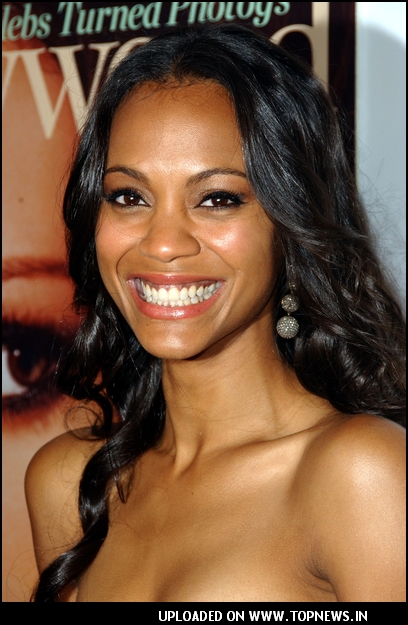

This is a complex issue for many dark skinned Latinos. Some call themselves Afro-Latino (or more specifically Afro-Cuban, Afro-Panamanian, or Afro-Puerto Rican, etc.), which clearly emphasizes their African heritage. Other call themselves both Black and Latino. Now on forms, there is a "Black (not of Hispanic origin)" box that you can check which I assume is to address this very issue. However, not all darker skinned Hispanic people like to be referred to as Black. For some, this may be an issue of not wanting to be lumped into the "Black" category which brings the burden of many negative stereotypes and disadvantages. For others, "Black" simply may not fully represent the full experience of who they feel they are. This is an excerpt of an interesting article talking about the identity issues that come with being Latino with African ancestry:

Interestingly, efforts to increase awareness regarding Afro-Latino culture and plight can be found on the campuses of historically black colleges and universities (HBCUs). At Howard University, Nadine Bascombe heads Cimarrones, a 50-member black student union of Caribbean, Central, and South Americans that recently expanded to include a chapter at Benedict College in South Carolina. Before Afro-Latinos can even begin to link the black-Hispanic communities, more Afro-Latinos must embrace their African heritage. "Within the population of what are considered Afro-Latinos, not all people identify with being black, so they'll join the Latino organizations because it's more of an assimilation of being white," says Bascombe, a junior. "It seems that if you relate yourself to being black it's something negative, so with that problem existing within the Afro-Latino population, not too many people run towards having an organization with that name."

This all came to me as I was looking at Latina.com and came across two beautiful Black Latina models. The first is Arlenis Sosa Peña who was discovered in the Dominican Republic.


The second is Sessilee Lopez, who is a self-described African-American fashion model (of Dominican and Portuguese decent), on the cover of Latina magazine. If you click the link it will take you to a letter to the editor written by a woman expressing her emotion over seeing a dark skinned Latina as the cover model.


I think no matter how you choose to label yourself, people will always go on what they see first. Unfortunately, there is still so much negativity surrounding what it means to be Black because of the history of stereotypes and under-representation (in a positive way) in the media. I think it's cool that we are beginning to see more and more people of color being represented in a positive light in our culture.

Clearly, there is no "one size fits all" descriptor for any ethnic or cultural group of people. This is a broad topic and many people have very strong opinions about it. So...do any of you consider yourselves to be Black and Latino/a? Do you know anyone who is? If so, what has been your experience with this identity? I only ask because I find it fascinating how we as Americans deal with the complexities of race (a social construct in my opinion), color and identity. What do you guys think?
Wednesday, January 28, 2009

Heat Damage

Hey Guys! I was thinking back on my natural hair journey and one of the biggest lessons I have learned in my 9 years is that heat is bad. Ok, well, not ALL heat is bad. But constant thermal straightening can wreak havoc on your hair. I posted early on about this being my second round of growth after a BC. I chopped first in 2000 then again in 2007. The reason for the second chop was massive heat damage due to excessive flat ironing. And by excessive I only mean once a month (sometimes twice). The front of my hair was completely limp and I had no curl definition whatsoever. I would blow dry, flat iron, then hot comb my roots! (GASP!) I know, it was bad. When I wore a twist out I literally had to take a tiny curling iron and curl the ends to give it some semblance of a shape. Since my 2007 chop, I have only heat straightened once and I am determined not to do it again. I was so paranoid that I might have wasted chopping the second time around by permanently straightening the front part again that I couldn't even enjoy the straight look. Don't get me wrong, I loved the versatility of going between nappy/curly and straight but I must say I LOVE having perfect curls all over my head, especially in the front! I had to learn to embrace my natural styles for any occasion, whereas I straightened before if I didn't know what to do for a wedding, party, etc. My goal is to never straighten again. I know I know, that is a lofty goal. But I think the health of my hair is worth it. Below are some tips on dealing with hair damage and what you can do to avoid it:

(A healthy hair and a damaged hair, UGH!)

There is no quick fix solution to damaged hair. If the damage is minor then regular treatment will restore it to health. However, with major damage like split ends or excessive heat damage, only scissors will do the trick!

1. Keep up with deep conditioning and protein treatments to avoid dry, weak tresses.

2. Avoid using heat tools where possible. There are other healthier options of styling!

3. If heat is used, use a temperature controlled tool (never stove heated ones) and use heat protectant on the strands beforehand.

4. Always make sure to freshly deep condition if heat is to be used.

5. Clarify after swimming to remove chlorine residue.

6. Air dry where possible or blow dry on a cool setting.

Taken from: http://ezinearticles.com/?Managing-Heat-Damaged-Or-Relaxer-Damaged-Hair&id=1712186

Of course, adjust them to your personal routine but I think overall they are helpful tips. If you must straighten, at least choose a good tool that regulates plate heat. Click here for info to help you choose the right straightener for you. Believe me, use heat with caution so you don't have to start over from scratch like I did!


Sunday, January 25, 2009

Breakage Woes...

Hey guys! I mentioned before that recently I seem to be dealing with some breakage issues. I have been changing my products and regimen around and manipulating more than usual so that probably has something to do with it. I also have been wondering about moisture/protein balance that I have read about on the net. Apparently it is possible that you may be using to much protein and not enough moisture or vice versa. Some naturals say they cannot use anything with protein as it makes their hair feel crunchy. If you already know this about your hair then, hey, go with what works. Every natural is different! But, for those of you who want more info about this fascinating moisture/protein balance thing, hop over here and gorge your eyes on a ton of information regarding just that! You might want to get yourself a snack ahead of time though, it is kinda long and will take some mental digestion. Click here to get your fill of moisture/protein info. Hopefully it is helpful!

Here's an excerpt:
Understanding the difference between breakage and shedding is an important part of any healthy hair regimen. Many people use these terms interchangeably to refer to any hair that falls from the head. In its true sense, shed hair is hair that has reached the end of its growing cycle and naturally falls from the scalp along with its root attached. The root is a tiny white bulb on the scalp originating end. If a hair does not possess this white bulb, then it is not a naturally shed hair—rather, a broken one. Shed hair tends to be longer in length than broken hairs which are generally short pieces of varying lengths. If you have stretched your relaxer for a great number of weeks, your shed hair will have the curly new growth present on the area next to the scalp, and you will be able to see where the relaxed hair begins. Some find that garlic shampoos or products with garlic extracts help curb shedding. But remember, shedding is a natural, internal process and may not respond to topical, external treatments. So don't be alarmed if nothing works for you. Changes in diet, hormone imbalances, birth control pills, and pregnancy can also affect the rate at which hair is shed.


Breakage on the other hand is not natural, and is an indication of an imbalance of important forces within the hair strand. Broken hairs do not fall naturally from the head, but are typically a sign of mishandling or abuse. The proper treatments, will help stop breakage in its tracks.

From: http://forum.blackhairmedia.com/forum_posts.asp?TID=22392

Friday, January 2, 2009

Hair Growth Article

I was surfing the net and landed on this article. I know many of us are determined to grow long, strong tresses but aren't quite sure how to do it. This article dispels some common myths many black women grew up learning about how to care for our hair. Hope it's helpful!